



CASE STUDY | Consumer Goods (FMCG)
New White Paper
Latin America’s role in global pharmaceutical manufacturing is evolving. As organizations expand production capacity, strengthen supply chain resilience, and respond to increasingly sophisticated regulatory expectations, workforce strategy is becoming a critical part of manufacturing success.
Our latest white paper explores why LATAM, with Brazil emerging as a key focal point, is attracting greater attention from global pharmaceutical manufacturers and what these shifts mean for HR and Talent Acquisition leaders.
Cost efficiency remains important, but pharmaceutical manufacturing strategies are increasingly being shaped by resilience, scalability, regulatory reliability, and proximity to growth markets.
Latin America offers a combination of established pharmaceutical ecosystems, growing technical talent pools, and regulatory frameworks that are becoming increasingly aligned with global standards.
For HR and Talent Acquisition leaders, the implications are significant. Manufacturing growth depends on having the specialized talent needed to maintain quality, support technology transfer, prepare for inspections, and operate successfully across both local and global regulatory environments.
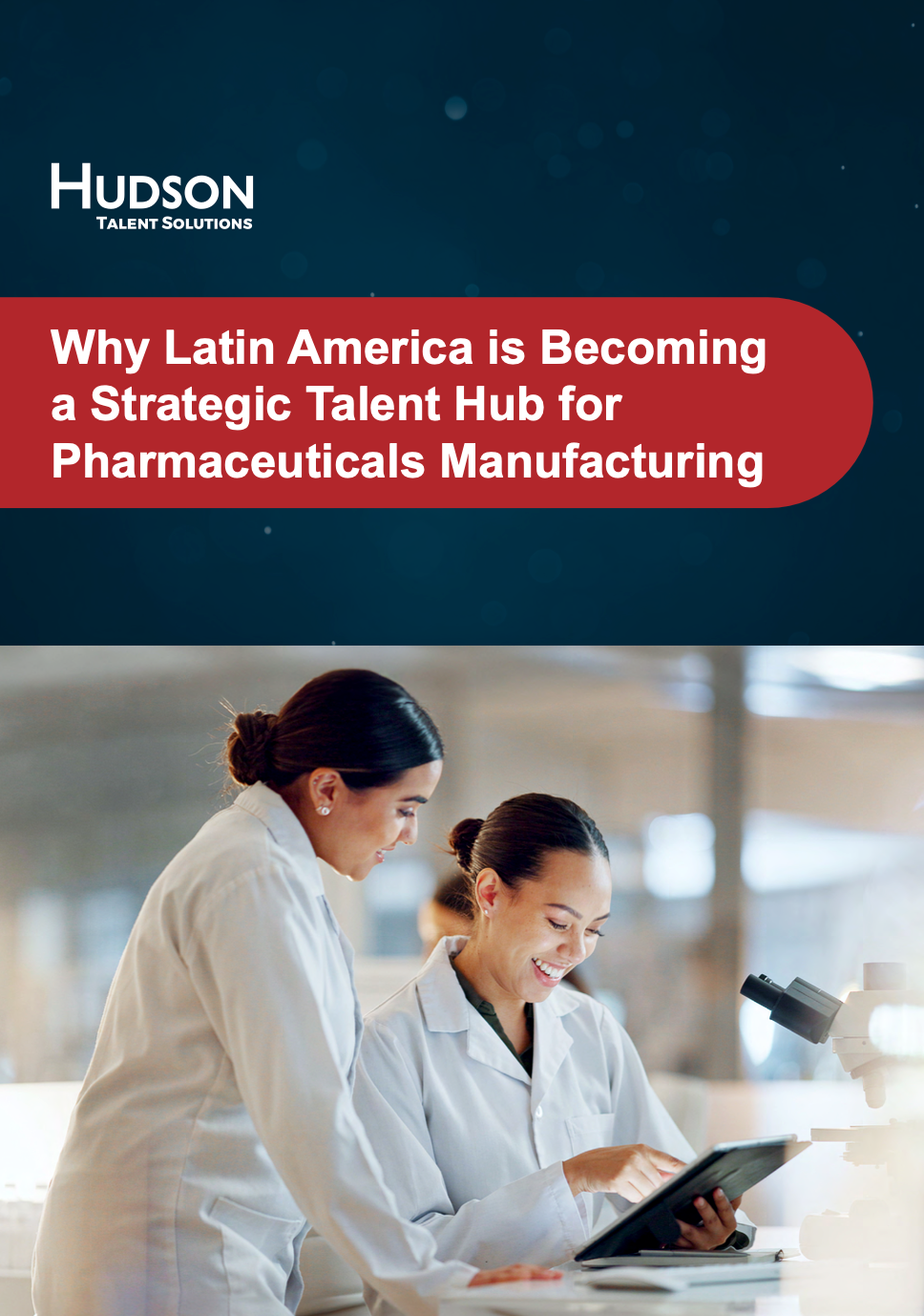
Explore the global forces driving pharmaceutical manufacturers toward more diversified, resilient production networks and the role LATAM can play within them.
Understand how continued manufacturing investment and an evolving regulatory environment are strengthening Brazil’s position within regional and global pharmaceutical production.
See why quality and compliance, manufacturing science and technology transfer, regulatory affairs, validation, data integrity, automation, and other specialized capabilities are becoming increasingly important.
Learn why workforce planning is becoming integral to inspection readiness, manufacturing resilience, operational scale, and the ability to bring critical therapies to market.
As pharmaceutical manufacturers expand across LATAM, workforce requirements are evolving alongside their operations.
Three areas are becoming particularly important:
01 | Quality & Compliance
Scaling regulated manufacturing requires experienced professionals who can support inspection readiness, audit management, documentation rigor, Quality Assurance, Quality Control, and global GMP expectations.
02 | Manufacturing Science & Tech Transfer
New production lines and regional product transfers increase demand for MSAT, process engineering, validation, and technology transfer expertise that can connect R&D, operations, and quality.
03 | Digital & Automation-Enabled Roles
Automation and data-driven manufacturing are reshaping skills requirements, creating demand for professionals who can combine manufacturing expertise with systems, technology, and analytics.
— Christian Scandella, Managing Director Latin America, Hudson Talent Solutions
For organizations investing in LATAM, the talent conversation is becoming a business-critical one. HR and TA leaders are increasingly responsible for helping their organizations protect compliance, accelerate growth, connect global expectations with local labor realities, and build the workforce infrastructure required for long-term manufacturing success.
As manufacturing investment, regulatory modernization, automation, and advanced therapies continue to reshape the pharmaceutical sector, talent strategy must evolve with them.
In this white paper, Hudson Talent Solutions examines the forces shaping pharmaceutical manufacturing across LATAM and Brazil, the specialized skills becoming increasingly important, and the actions HR and Talent Acquisition leaders should be considering now.
Hudson Talent Solutions combines deep regional understanding with global execution experience to help pharmaceutical organizations align workforce strategy with operational and regulatory requirements.
Our teams support organizations navigating:
Whether your organization is preparing for growth, modernization, or increased global visibility across LATAM, our experts can help you build a talent strategy aligned with what comes next.